TCW (Treibacher Chemische Werke) was founded in 1898 in Treibach (Austria) by Dr. Carl Auer von Welsbach. After the invention and patenting of the lighter "flint" (ferrocerium), consisting of an alloy of cerium and iron, the company began producing flints in 1903 and from 1907, also manufactured lighters. Here are some pages of the TCW Catalog from 1929/1930.
ASR, Colibri, Dunhill, Dupont, Evans, Negbaur, MTC, Rolstar, Ronson, Rowenta, Zippo and many others...
Price guide included! You will also find books, catalogs, patents and magazine advertisements on lighters!
Showing posts with label wick lighter. Show all posts
Thursday, March 21, 2024
Tuesday, July 27, 2021
Ronson "Ronde-Light", Art Metal Works, USA 1929
The Ronson "Ronde-Light" was one of the earliest automatic table lighters made by Art Metal Works Inc.
in Newark (New Jersey) USA. It was manufactured between 1929 and 1932. It was sold as lighter and paper weight as it was quite massive.
RONSON RONDE-LIGHT
U.S. PATS.
1290011-1673727,
OTHER U.S. & FOREIGN PAT'S PDG.
ART METAL WORKS INC.
NEWARK, N.J.
Type: petrol (wick) lighter
Scarcity: very rare
Value for good–mint condition (extremly rare in this condition): $150–300.00 (approx. €125–250.00)
Weight: 350 grams (12.5 oz)
Dimensions:
- height: 9 cm (3.5")
- diameter: 8 cm (3.15")
Monday, September 2, 2019
Carrier, Luminus electrical lighter, Paris 1900
The "Luminus" electrical lighter (fr. Allumoir électrique) was invented, patented and manufactured by BERNARD-ALEXANDRE CARRIER in 1900 in Paris (rue Fenelon 7), France. It based on the invention of a fluid cell battery by Grenet
It was advertised in the French press as "essential device for you. Instant light by pressing a button" (fr. Appareil indispendable chez soi. Lumiere instantanee en pressant un bouton)". It was the best known bichromate electric lighter and the "Luminus" name is now in use for other lighters that type as well.
The Luminus lighter operated on a liquid battery (bichromate potassium) and carbon electrodes that were situated in the bigger glass bottle. By pressing the button a zinc plate submerges into the fluid and current is flowing into the platinum filament which is glowing. It lights up the pilot wick which lights the main wick for longer use without need to keep the button pressed and stressing the battery. Both wicks were emersed in petrol in the small bottle. According to Carrier 600 ignitions were possible till a next refill of bichromate potassium.
The first model of the Luminus lighter won the gold medal at the 1900 Exposition Universelle in Paris and was replaced in 1904 by the second model which introduced a second cap and was produced until 1914 (vide patent drawings no. FR3883).
The glass bottles of the Luminus were made mainly in cobalt blue, less common are light blue, green, yellow or orange glass. The lighter is unmarked. The LUMINUS lighter is exposed among others at the: Deutsches Heildelberg Museum-Castle and Museum Bryant & May to London-Museum of Arts&Crafts in Paris.
Type: electrical petrol (wick) lighter
Scarcity: uncommon-rare
Weight: ca. 600 grams
Type: electrical petrol (wick) lighter
Value for very good condition: 300 USD (approx. 250€)
Weight: ca. 600 grams
Dimensions:
- height: 22.5 cm
- width: 10 cm
Friday, July 5, 2019
Ronson Rondelight Cricket Ball Lighter, UK 1950
The new 'Rondelight' was made in the 1950s in the United Kingdom. This table lighter is in the shape of a cricket ball covered in genuine leather.
The lighter insert was also used in Wedgwood ceramics and other ball-shaped bases like: plain chromium plate, covered with brown leather or chrome and enamel in six color combinations (lower part/stripe): black/red, black/black, black/blue, black/green, lavender/white and white/gray etc.
The chrome plate lighter fitment 'New Standard' Ronson is removable and it is marked on the bottom:
RONSON
TRADE MARK
MADE IN ENGLAND
RONDELIGHT
BRIT. PAT. 621570
Type: petrol (wick) lighterTRADE MARK
MADE IN ENGLAND
RONDELIGHT
BRIT. PAT. 621570
Value for very good condition: $100 (approx. €80)
Weight: 230 grams
Dimensions:
- height: 7 cm (2.76")
- diameter: 5.5 cm (2.17")
Gebrüder Köllisch, Druco Lighter, 1948
The Druco table lighter was first manufactured in 1948 in Nürnberg, Germany by Gebrüder Köllisch. The body of this petrol lighter is made of brass. This semi-automatic lighter has a nice sun ray design etched in the black paint. Other designs are known.
The lighter is not marked. The bottom part of it can be used as an additional tank for petrol.
Type: semi-automatic wick (petrol) lighter
Scarcity: uncommon-rare
Value for very good condition: ~$60.00 (approx €50.00)
Weight: 165 grams
Dimensions:
- height: 7.6 cm
- length: 7.7 cm
- width: 3.6 cm
Thursday, July 4, 2019
Ronson Savoy Gold Table Lighter, 1953-1954
The Ronson Savoy wick table lighter was made between 1953-1954 in Newark, New Jersey, USA by Ronson. It is a lighter with a very appealing design in heavy 24K gold plate. It was the most expensive table lighter mass-produced by Ronson ($19.50) at that time.
The lighter mechanism was used since 1936 when the Ronson Decanter and Puritan were first introduced. Below an illustration of the lighter models 'Decanter' and 'Savoy' from the 1954 Ronson catalog.
The lighter base is padded with a light green felt trim and marked:
Ronson (R)
Newark, N.J. U.S.A.
U.S. Patent 2,481,195
(R)
Ronson
SAVOY
Type: automatic wick (petrol) lighter
Scarcity: rare
Value for very good–mint condition: $240.00–350.00 (approx €200.00–300.00)
Weight: 331 grams
Dimensions:
height: 11.5 cm
diameter: 5.6 cm
Sunday, February 3, 2019
Pocket match holders / vesta cases converted into lighters, XIX/XX century
Pocket match holders, also called 'vesta cases' or 'matchsafes', were holding a number of friction matches and were introduced in the 1840s. They were made from precious (metals like silver, gold) to common (brass, copper, German silver, wood, celluloid etc.) materials. The most popular material was solid silver, and silver-plated brass. The phosphorus head of the match could be easily ignited when rubbed against roughened serrations.
Vesta cases are a wonderful area for collectors - the variety of decorations, styles and quality is stunning. The most sought after are figural novelty vestas and those finely painted by hand. The heyday of pocket-sized matchboxes was between 1870 and 1920 - hundred of thousands were made by silversmiths and workshops around the world.
After 1907 matches as well match holders were slowly displaced by lighters. The invention of ferrocerium (lighter flint) began a new era of lighters that were very cheap in production. A new designation for vesta cases was found - small family owned metal workshops began to convert vesta cases into petrol lighters. Such case was ideal for such operation as vesta cases were designed to keep friction matches safe and dry (tight fit). Such converted lighters are quite difficult to find nowadays but nice to have in once tobacciana collection.
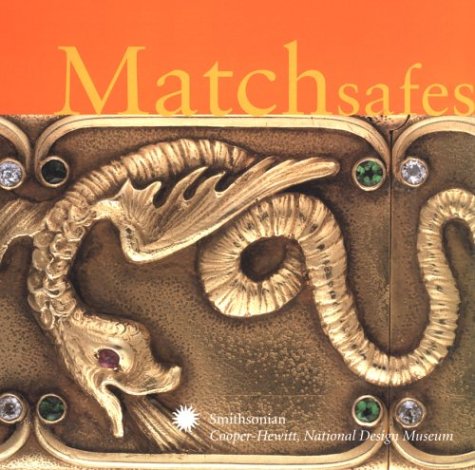
One of the best books on matchboxes is the 'Matchsafes' edited by Deborah S. Shinn. It has a great selection of vesta cases, wonderful photos and a lot of interesting info.
Thursday, January 31, 2019
Ronson Wedgwood Celadon Table Lighter, 1954
This wick table lighter was made in ca. 1955 in England by Ronson and Ofeturia & Barlaston Wedgwood. The ceramic base is in a oyster shape and is finished in a classic celadon (willow-green color) glaze.
The Ronson lighter insert is round in shape, made of brass and chrome-plated and marked on the bottom:
Ronson Trademark
Made in England
The lighter base is padded with felt and marked:
Ofeturia & Barlaston
Wedgwood Celadon
Made in England
Type: automatic wick (petrol) lighter
Scarcity: uncommon
Value for good–mint condition: $40.00–60.00 (approx €30.00–50.00)
Weight: 125 grams
Dimensions:
height: 7.4 cm
length: 7.5 cm
Monday, January 28, 2019
Barnett Pearlman Polo Automatic Lighter, 1948
The Polo Automatic Lighter was made by Barnett Pearlman & Co. Ltd in London, England between ca. 1948-1952. The base is made of brass and heavy chrome-plated. The bakelite pedestal gives the column shaped table lighter additional stability.
The lighter was available in two different heights: 9 and 13 cm. The automatic lighter mechanism was invented by Ernest Shinwell and patented by Barnett Pearlman & Co. in 1948 (patent no. 642,908).
The wick lighter is marked on the underside of the base:
Made in England World Patents
POLO
REGD. DES. NO. 857204
POLO
REGD. DES. NO. 857204
Scarcity: uncommon
Value for very good–mint condition: $50 (approx €30)
Weight: 285 (tall), 235 grams
Dimensions:
- diameter: 6.7 cm
- height: 13 cm (tall), 9 cm (short)
Friday, November 25, 2016
Saturday, November 19, 2016
Evans Lighters Catalog, USA 1930
Evans pocket lighters from the 1930s have a beautiful Art Deco look. Here are four pages from a Wholesale Catalog from the 1930 featuring Evans pocket and table lighters. Stunning!
Thursday, September 22, 2016
Petit point dressing table lighter, 1955
This unusual dressing table lighter was made by 'REGENT of London' between 1955 and 1959 in London, England. The gold-tone brass lighter base is pierced and has floral petit point needlework panels (tent stitch embroidery). The structure of the lighter base is made of wood. The design of the case is marked:
REG. DESIGN NO 876990
Made in England (not always present)
Unfortunately the registered design cannot be obtained online although the design itself was registered between March and June of 1955 and is held physically in the National Archive in Kew, Richmond in England. One more design of this lighter is know to exist (based on a rectangle) but is rare.
The wick lighter insert is made of brass, no markings are available.
The table lighter was sold alone or in a vanity set comprising of an matching alarm clock, candlesticks, rectangular musical trinket box, powder box with mirror lid but also a dressing table tray, hair brush, mirror and manicure set with stand and perfume bottle (not pictured).
Scarcity: uncommon
Value for very good–mint condition: 30–40.00 USD (approx €25.00–35.00)
Weight: 230 grams
Dimensions:
- height: 5.8 cm
- width: 4.9 cm
- length: 7.9 cm
Sunday, September 11, 2016
Mylflam - 1000 Zünder - table lighter Model 111, 1948
This table lighter Modell 111 was manufactured between 1948 and 1953 in Frankfurt am Mein in Germany by Mylflam Metallwaren GmbH. This semi-automatic petrol lighter was marketed in many different finishes like: silver, nickel plate, brass, lacquer, various types of leather etc. Below an example of the Mylflam Model 111 in nickel plate and mother of pearl finish.
The wick lighter was generally made of brass. Marked on the underside of the base:
MYLFLAM
Scarcity: uncommon–rare (depending on type of the finish)
Value for very good–mint condition: $80.00–160.00 (approx €70.00–140.00)
Weight: 230 grams
Dimensions:
- height: 7.4 cm
- width: 4.3 cm
- length: 8.9 cm
Saturday, December 12, 2015
Japanese Horse-Drawn Carriage Table Lighter, 1959
The removable wick lighter insert is chrome-plated and stamped on the side JAPAN and on the bottom:
PAT. NC. 531887
Scarcity: uncommon
Value for very good condition: 99 PLN (approx. 87 PLN)
Weight: 120 grams (0.26 pounds)
Dimensions:
- height: 7 cm (2.8")
- width: 5 cm (2")
- length: 12 cm (4.7")
Tuesday, October 27, 2015
Beney Lighters Catalog, England 1950s
Below some miniatures of the newly digitized Beney Lighters Catalogue from the 1940s/1950s. It covers the whole Beney lighter portfolio:
If you make a donation of $5 and you get this and couple of other publications on lighters (for instance: Lighter Repair Manual) in PDF delivered to you by email! Thank you!- Beney Saville Super in Baron, Knight and Lady sizes (pocket lighter).
- Beney Strikalite (pocket lighter).
- Beney Thada (table lighter).
- Beney Saville Globe (desk lighter).
- Beney Alfresco (pocket lighter).
Monday, October 26, 2015
FAQ: Favorit How to Fill and Replace Flint, 1940s
This instruction leaflet was added to all "Favorit" pocket lighters made by Adolf Kinzinger and Ferdinand Wagner (Pat. Ang.) in Pforzheim, Germany in the 1940s and 1950s.
The leaflet was available in three languages: French, German and English.
Saturday, September 12, 2015
Thorens Portor "Lady" Desk Lighter, 1928
The Thorens Portor "Lady" Table/Desk Lighter was manufactured in Switzerland in 1928/1929. The wick lighter insert is a Thorens semi-automatic 'single claw' model that was manufactured between 1918 and 1935. It is made of brass and gold plated; stamped:
GOLD PLATED
MADE OF SWITZERLAND
B L
and G T on the top lid
The discreet "BL" (fr. Briquet de Luxe, eng. luxury lighter) indicates that the lighter was intended to be sold in France as it is a French tax mark. The mark was introduced in 1926 and applied only on luxury lighters like Quercia, Lancel and Thorens.
The column shaped base of the lighter and the Art Deco nude lady are made of brass. Both have an antique finish applied on. No monogram shields present and no marks on the bottom of the base. More info about the lighter and the GT stamp are welcome!
Type: petrol (wick) lighter
Scarcity: very rare
Value for very good–mint condition: $450–650.00 (approx. €400–550.00)
Weight: 195 grams (0.43 pounds)
Dimensions:
- height: 8.9 cm (3.5")
- diameter: 5.6 cm (2.2")
Thursday, September 10, 2015
Ronson Art Déco Table Lighter, 1934
The Ronson "Art Déco" also referred as the "Tall Boy" (Urban Cummings) is one of the rarest and most representative lighters for the Art Deco period ever made by Ronson. It was manufactured in a small amount between 1934 and 1935 by ART METAL WORKS INC. in Newark (New Jarsey) in the United States.
Art Deco was the predominant decorative art style of the 1920s and 1930s, characterized by precise and boldly delineated geometric shapes and strong colors. The favorite materials used in finishing household items were glass, chrome, bakelite and enamel.
This particular lighter has a chrome plated brass body which major part is covered with black enamel which gives a very contrastive design. The lighter is relatively tall and thin and is neither handy nor particularly heavy.
RONSON DE-LIGHT
U.S. PAT. RE. NO. 19023
ART METAL WORKS INC.
NEWARK, N.J. U.S.A.
RONSON DE-LIGHT
PATENTED JUNE 17.1928
Type: petrol (wick) lighter
Scarcity: very rare
Value for very good–mint condition: $400–600.00 (approx. €300–500.00)
Weight: 155 grams (0.33 pounds)
Dimensions:
- height: 13.9 cm (5.5")
- width: 4.1 cm (1.6")
- depth: 6.8 cm (2.7")
Wednesday, September 9, 2015
Ronson De-Light Superba Table Lighter, 1929
The Ronson De-Light "Superba" (model no. 12773) was one of the earliest automatic table lighters made by Art Metal Works Inc. in Newark (New Jersey) USA. It was manufactured between 1929 and 1932. The design of the lighter was patented by the United States Patent Office in 1929 (patent no. 80,214). This wick lighter was designed by the founder of AMW – Louis V. Aronson – himself.
The lighter is shaped like a trophy with a handle and made of brass and chrome plated. The body of the lighter is based on a hexagon and each wall has an engine-turned design. On one side a small rectangle monogram shield is present (see photo above).
RONSON DE-LIGHT
"SUPERBA"
"SUPERBA"
U.S. PATS.
1290011-1673727,
OTHER U.S. & FOREIGN PAT'S PDG.
ART METAL WORKS
INC.
NEWARK, N.J.
U.S.A.
RONSON DE-LIGHT
PATENTED JUNE 17.1928
Type: petrol (wick) lighter
Scarcity: very rare
Value for very good–mint condition: $300–500.00 (approx. €250–400.00)
Weight: 150 grams (0.32 pounds)
Dimensions:
- height: 12,9 cm (5")
- width: 7.5 cm (3")
- depth: 5.3 cm (2")
Friday, April 3, 2015
eBay: Thorens Dog Desk Lighter, 1929
A beautiful Thorens Table/Desk Lighter was recently sold on eBay for a modest $350. The auction received 27 bids from 18 bidders. The wick desk lighter is a rare piece coming from the late 1920s. The lighter insert is a Thorens 'single claw' type that was manufactured between 1918 and 1935 in Switzerland. The gold-plated base of the lighter is very unusual - a Scottie dog is leaning against a column. Perfect design!
And here some additional photos from the seller.
Subscribe to:
Posts (Atom)