Showing posts with label collecting lighters. Show all posts

Saturday, September 12, 2020

Antique table cigar lighters / cigar lamps - history and characteristics


According to Oxford Dictionary a lighter ‘is a device that produces a flame for lighting cigarettes, etc.’ This definition would not fit to the old table cigar lighters as they had to be lit by other means although their purpose was to lite cigars, cigarettes and sometimes pipes. They were filled with a wick and kerosene but had no ignition mechanism.
 

Cigar lighters (also called cigar lamps) were manufactured in various shapes although the most popular forms are of a Roman oil lamp and Aladdin's Lamp with snake handle (see pictures). There was also a broad range of novelty shapes like hunting horn, pyramid, spherical bomb or flaming grenade. Traditional shapes include urn or vase - some of them were sold with matching ashtrays that could be put under the cigar lighter to save space on the table. Lighters with a lid, instead of a simple wand, are chained to the lighter base in order to avoid the lid to be lost.

Popular are oriental forms like dragons often combined with horn (mainly buck, antelope and deer antler) handles and gyroscopic mount so that the flame is always pointing up. More sophisticated figural lighters (for instance laying moon, wild animals, grotesque or exotic figures, castles, ships etc.) are sought after by collectors and these with a lot of fine detail command very high prices counted in thousands of EUR. Table cigar lighters collectors pay attention not only to the style, craftsmanship but also to the maker of the lighter. They were made by top class silversmiths including Georg Jensen (Denmark), Tiffany & Co (USA) and a whole British makers.  

Most of the cigar lighters were meant to carry and pass around the table so they have convenient handles, but others were more stationary and have at least one wick-holder (called wand) to transfer the flame to one's cigar (or pipe), this often with spiral-fluted handle or one decorated as a flame or a simple sphere. Smoking sets consisted of a tray, usually a cigar cutter, 4-6 ashtrays and cigar lighter with one to up to five wands.

As table cigar lamps were intended initially for the wealthiest it was a natural practice to make these lighters of solid silver (mainly sterling .925) and of the highest quality. Silver-plated cigar lighters were made for those who could not afford these made of solid silver. The base metal was often cooper or zinc alloy (pewter). Especially sought after are lighters manufactured in Arts&Crafts and Art Nouveau periods by Elkington & Company (UK), WMF (German, Austria, Poland, France), Christofle (France) or Kaiserzinn (Germany). Some were also used in restaurants or cafeterias.

Table cigar lighters were manufactured between 1840-1949 though its heyday of shapes and popularity was somewhere between 1860-1910 which corresponds with the golden age of cigars. The biggest market for silver table cigar lighters was Great Britain - in that time the richest country in the world.

A whole different range of cigar lighters were counter cigar lighters used in general stores and tobacco shops. These were always lit and were using kerosene (lamp oil) or gas (methane, butane). Later after the 1880s also wall and counter electric cigar lighters (mainly in USA) were used which were lighting up on demand. I will describe them later in a new article on table-lighters.com.

Sunday, February 3, 2019

Pocket match holders / vesta cases converted into lighters, XIX/XX century


Pocket match holders, also called 'vesta cases' or 'matchsafes', were holding a number of friction matches and were introduced in the 1840s. They were made from precious (metals like silver, gold) to common (brass, copper, German silver, wood, celluloid etc.) materials. The most popular material was solid silver, and silver-plated brass. The phosphorus head of the match could be easily ignited when rubbed against roughened serrations.

Vesta cases are a wonderful area for collectors - the variety of decorations, styles and quality is stunning. The most sought after are figural novelty vestas and those finely painted by hand. The heyday of pocket-sized matchboxes was between 1870 and 1920 - hundred of thousands were made by silversmiths and workshops around the world.


After 1907 matches as well match holders were slowly displaced by lighters. The invention of ferrocerium (lighter flint) began a new era of lighters that were very cheap in production. A new designation for vesta cases was found - small family owned metal workshops began to convert vesta cases into petrol lighters. Such case was ideal for such operation as vesta cases were designed to keep friction matches safe and dry (tight fit). Such converted lighters are quite difficult to find nowadays but nice to have in once tobacciana collection.

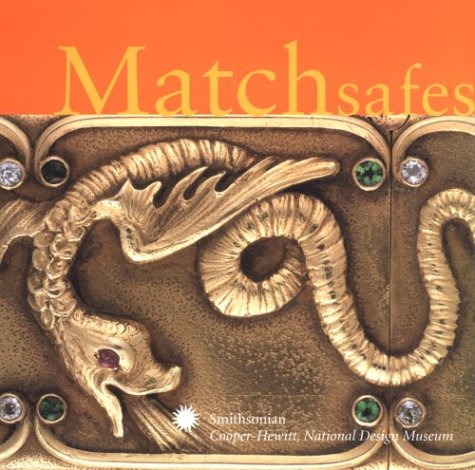
One of the best books on matchboxes is the 'Matchsafes' edited by Deborah S. Shinn. It has a great selection of vesta cases, wonderful photos and a lot of interesting info.


https://www.amazon.com/Matchsafes-Cooper-Hewitt-National-Smithsonian-Institution/dp/1857592379/ref=as_li_ss_tl?ref_=nav_signin&&linkCode=ll1&tag=tablelighteco-20&linkId=84a9f3a07f4044aab5b19aef24b5481b&language=en_US

Saturday, January 27, 2018

Catalog: S. Sakakura Cigarette Lighters and Cases, Japan 1930s


S. Sakakura was a Japanese company specializing in production of good quality cigarette lighters. Below the whole table lighters section from the 9th catalog from the 1930s. Enjoy!


Saturday, December 9, 2017

Lighters auction results, USA 12-2017


On the 6th of December 2017 an interesting auction of lighters took place. Almost 50 lots were sold among others such rare table lighters like: German Henckles Plane, GE Transformer Zippo, Dunhill Clock and Marconis Souvenir Disc Discharger Lighter.

If you are a buyer you have to add a 25% premium to the "sold for" price.


Friday, March 17, 2017

18th International Lighter Convention in Krefeld, 2017


On the 13th of May 2017 the 18th International Lighter Convention in Krefeld, Germany will take place! Table holders can set-up from 9:00 to 10:00 AM. More info can be obtained from Grahame Martin: grahame.martin@t-online.de. I hope to be there!

Tuesday, January 12, 2016

An interview with a collector: Flavio


Today, I have the distinct pleasure of introducing you to Flavio a dedicated Ronson collector from Italy. He has probably the biggest collection of Ronson lighters in the world. Enjoy his story! 

Can I ask you to briefly introduce yourself?...

Hello, my name is Flavio. I was born in 1955. I live in Italy near the beautiful city of Turin. I work in the real estate sector and soon I’ll get married to my beloved companion Francesca.

Congratulations to you, Flavio. Tell me, when have you started collecting Ronson lighters? What were the beginnings of your passion and why Ronson?

All started about 15 years ago. This is the story behind it: in the 1970's in Italy smoking was very common and I started to smoke too. On the occasion of my birthday my grandfather gave me a lighter (photo below), which unfortunately I lost in year 2000. A friend of mine saw my sadness related to the lost of my favorite memory of my grandfather and he gave me some advice: "Try searching on the internet. There is a site called eBay where people sell anything. Maybe you will be able to find a similar lighter." I did so and I found it! Then I bought another nice pocket lighter. Then a table lighter and then a vintage one... and now I have almost 3000 Ronson lighters!


I really take a liking on the table lighters made by Ronson and about half of the collection consists of them. They are made of silver, crystal, glass, various metals, ceramics and so on. Some of them are very bulky and some are also very rare. And still there are some lighters that I am missing in my collection like the sphinx, the devil, the airplane. I would love to find them. So far I have been collecting all Ronson lighters including the first striker lighters patented in 1913 as well the most recent lighters that come out after the rebirth of the brand.

Do you collect any other things than Ronson lighters? 

I have to answer your question this way. Unfortunately, my passion made me collect also other lighter brands like Dunhill, Cartier, S.T. Dupont, Evans, Colibri etc. But these I have only about 200 pieces and almost all of them are table/desk lighters. I have decided to buy them either of their beauty or rarity. I also have a small collection of SAFFA (Società Anonima Fabbriche Fiammiferi e Affini) Milan – they were very popular in the 1970/80 and they came out in beautiful designs!

What has been the major source of your lighters?

My favorite hunting ground is eBay from where I bought approximately 70% of my lighters. But also various exhibitions of used and old things are good places to find missing lighters. Near where I live, every Sunday there is a flea market that I often visit. And two or three times a year there are very large exhibitions in Parma and Milan. Flea markets are generally a good excuse to go out on Sundays and visit some new towns and places.

The nice thing about eBay is also the opportunity to meet and make friends with other "crazy" collectors and  also talk about things that are not necessarily connected with lighters. Currently my "friends of the fire" are Dario, Danilo, Santo, Diego and Maurizio from Italy, Sebastian from Poland, IRA from USA, John from France and Australia, Theodore from England, Franz and Helmut from Germany and Carlos from Mexico. A very diverse bevy. The only problem I have is my poor English so I am very pleased with google translator which as I am aware makes me sometimes write "nonsense incredible"!

What is your collection for you personally? What is your dream connected with it and what do you do to make it reality?

There is no real reason why collections begin. It is something totally subjective. For me, it is the pleasure of having and preserving something beautiful, rare, historic and artistic and, in addition, the emotions you feel when you find the missing piece. I also like to believe that it is a small investment in the future.

I have so many projects that I would like to start and finish, but I see them all difficult to achieve for the matter of time or cost. I'd like to make a small exhibition of the most interesting pieces I have; or a small museum. Maybe a book or a collection of photos on DVD. I could then sell them on eBay and recover some money. We will see...

Does your family understand, support or even share your passion of collecting lighters? 

Fortunately, my future wife is a collector herself. She collects among others Lenci dolls, Wedgwood pottery, figurines of horses. So she understands, supports and accompanies me in my passion. The big problem is the space in the house which is now almost fully utilized because of the loads of showcases.

What has been your most exciting lighter finds? 

My best find was a beautiful cigarette lighter in mother of pearl. I have already had such lighter. When I saw it on a stand, I got an adrenaline rush and after some negotiations I managed to buy it. I paid 20 euros and I was happy as a child at Christmas! Or when I bought the whole collection of Danilo, a friend from Milan who had decided to get rid of his ca. 400 lighters. Some of them were very rare. It was a tough negotiation lasting almost five hours.


Could you name your top 10 favorite Ronson lighters in your collection?

It is difficult to point the top ten lighters among all the ones I have. Let's say that I like some series of Ronson lighters. Among the table lighters I would chose the chrome plated dancers, animals, those crystal lalique, and ceramics Bjorn Wiinblad lighters. Among the Ronson pocket lighters I like the Banjo, the heart shaped lighters and the classic Varaflame.

Can you give novice lighter collectors any hints regarding collecting lighters?

As the world of lighters is immense – just think about how many different models were marketed by Zippo – my advice to those who want to start a collection of lighters would be choose your field of expertise! It might be narrowed to a brand, material used, new or vintage, the origin, type (gas/petrol), the target group (for example: military, pocket or women) etc. And, initially, do stick to that choice. Otherwise the collection might be to broad and you might lose the pleasure of hunting the rare pieces! And another tip is be curious – study, seek, learn and make friends with other collectors. There are great people around!

Thank you Flavio for your time. It was a pleasure to talk with you! I hope you will soon find the missing pieces in your collection to make it complete and good luck with your exhibition! 

***

Below some pictures of parts of Flavio's collection.