Showing posts with label smoking collectibles. Show all posts

Sunday, February 3, 2019

Pocket match holders / vesta cases converted into lighters, XIX/XX century


Pocket match holders, also called 'vesta cases' or 'matchsafes', were holding a number of friction matches and were introduced in the 1840s. They were made from precious (metals like silver, gold) to common (brass, copper, German silver, wood, celluloid etc.) materials. The most popular material was solid silver, and silver-plated brass. The phosphorus head of the match could be easily ignited when rubbed against roughened serrations.

Vesta cases are a wonderful area for collectors - the variety of decorations, styles and quality is stunning. The most sought after are figural novelty vestas and those finely painted by hand. The heyday of pocket-sized matchboxes was between 1870 and 1920 - hundred of thousands were made by silversmiths and workshops around the world.


After 1907 matches as well match holders were slowly displaced by lighters. The invention of ferrocerium (lighter flint) began a new era of lighters that were very cheap in production. A new designation for vesta cases was found - small family owned metal workshops began to convert vesta cases into petrol lighters. Such case was ideal for such operation as vesta cases were designed to keep friction matches safe and dry (tight fit). Such converted lighters are quite difficult to find nowadays but nice to have in once tobacciana collection.

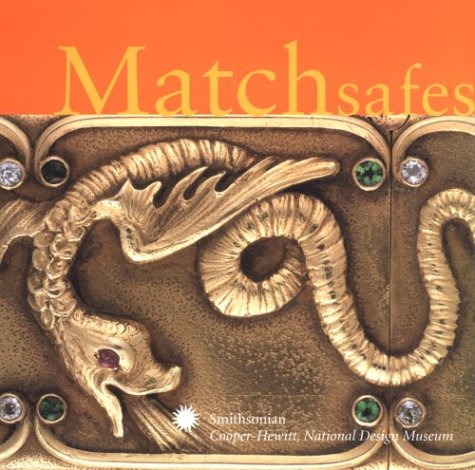
One of the best books on matchboxes is the 'Matchsafes' edited by Deborah S. Shinn. It has a great selection of vesta cases, wonderful photos and a lot of interesting info.


https://www.amazon.com/Matchsafes-Cooper-Hewitt-National-Smithsonian-Institution/dp/1857592379/ref=as_li_ss_tl?ref_=nav_signin&&linkCode=ll1&tag=tablelighteco-20&linkId=84a9f3a07f4044aab5b19aef24b5481b&language=en_US

Tuesday, July 10, 2018

Phoenix Bird Match Holder, France 1870s


Match holders are another interesting discipline of collecting smoking related items. They were made in various forms and in almost every available material. Match holders made their appearance by the 1850s, ca. 20 years after the first friction match was invented in 1827 by John Walker.

Below is an example of a phoenix bird match holder for tabletop made in France in the 1870s. It is made from a non-magnetic alloy containing mainly zinc and lead. The bird perched on the side of the box has a double pin in his beak and when his head is pushed down he spears a match and retrieves it. The striking surface is located on the back of the phoenix. It is marked (modèle) "déposé" which means that the design was officially registered in France. 


A very good book for collectors on match holders was written by Jean and Franklin Hunting "Collectible Match Holders for Tabletops and Walls. With Price Guide". Well worth the money. It contains 541 photographs with descriptions as well as information on the history of matches and match holders and design patents and their time frames.

https://amzn.to/2zr3XZE

Monday, November 30, 2015

"Oh, for my lighter!" postcard, Canada, 1942


Here we have an example of a color postcard from the WWII era. It depicts a small boy handing the Canadian soldier a can with petrol (fr. essence) for the jeep. In reply he gets this: Oh, for my lighter! A bit of humor in the very unhappy times. The postcard was printed in Belgium.


Monday, March 9, 2015

Wills's Cigarette Cards: Automatic Cigarette Lighter and Safety Matches, 1926


These two British cigarette trade cards were issued by W.D. & H.O. Wills (tobacco manufacturer) in 1926. They are part of the 50 Wills's Cigarettes 3rd series cards called “Do You Know”. In the UK, Wills in 1887 were one of the first companies to include advertising cards with their cigarettes.

The first card (no. 28) shows the anatomy of an "automatic lighter" (actually it is a semi-automatic lighter). 


On the back of the this card Wills explains how this lighter work:
When the spring knob is pressed the lid flies open, and the steel wheel A rotates. The “flint” is held against the wheel by a spring (not shown in the diagram), and the friction of the milled edge of the steel wheel against the “flint” sends a spark to the wick C and ignites it. The wick is fed from the small reservoir D, which is packed with cotton wool and supplied with petrol.


Other Wills's Cigarette Card linked to fire making is the card no. 40 that explains why is the safety-match safe.


The explanation is as follows: 
Old-fashioned phosphorus matches had many disadvantages. The ordinary white or yellow phosphorus used in them is a deadly poison responsible for many accidental deaths, while the workers who made the matches often suffered from phosphorus poisoning. A modified form of phosphorus know as red phosphorus was first used for making matches in Sweden about 1850. This is perfectly harmless substance, and the manufacture of Safety-Matches is therefore not dangerous. Modern matches are safe in another sense: the phosphorus required for lightning is on the box and not in the match-heads, which are therefore much less liable to catch fire accidentally.

Saturday, March 29, 2014

Antique postcard depicting two lovers,1920s


Here we go a vintage (probably Polish) postcard from the Art Deco period. It depicts two lovers who use a cigarette as a lighter.

Thursday, March 27, 2014

Catalog: Lancel Lighters and Smoking Accessories, 1937


The Lancel Company was established by the Lancel Family in 1876. Initially the business consisted of one store situated near the new Opéra Garnier in Paris, France. The main group of products were smoking accessories and leather goods. In 1928 Lancel began manufacturing lighters in their own factory. In the early 1950s Lancel introduced a butane lighter of the same design as their then current petrol model. Production of lighters ceased in 1965 and Lancel focused on selling woman accessories. Below the lighter part of the Lancel catalog from 1937.


Sunday, March 16, 2014

15th International Lighter Convention in Krefeld, Germany


On the 3th of May (Saturday), 2014 the 15th International Lighter Convention in Krefeld, Germany will take place.

Table holders can setup from 9:00 AM to 10:00 AM.
Early entry from 9:00 - 10:00 AM is 10.00 EUR.
Entrance fee from 10:00 AM is 5.00 EUR.

More info can be obtained from Grahame Martin: grahame.martin@t-online.de

As I won't be able to come this year I wish all the visitors great fun and precious memories!

Wednesday, March 13, 2013

Liebig: Chromo Advertising Trade Cards - Making of Fire, 1908


I have recently discovered a fantastic field of ephemera collectibles; namely the advertising trade cards from the Liebig Company (producer of meat extract) issued between 1872-1939. The colored lithographed cards instantly become very popular and collectible. Each series has 6 or 12 cards and the size of each card is approx. 4.1" x 2.8".

One set of Liebig (Oxo) cards might be of interest to lighter collectors. The set no S0932: The making of fire was issued in 1908 and was available only in French (La production du feu), German (Erzeugung des Feuers) and Italian (La produzione del fuoco). This particular lot costs between €15-30.


Picture 01:      Das Feuerreiben in der Urzeit
Picture 02:      Feuererzeugung durch Sonnenstrahlen
Picture 03:      Das Platinfeuerzeug
Picture 04:      Bäuerin gebraucht das Zunderfeuerzeug
Picture 05:      Das Stippfeuerzeug
Picture 06:      Die ersten Phosphorzündhölzer

Sunday, January 6, 2013

Collecting lighter lapel pins


Zippo's 5th Anniversary 1932-1937 pin
A lapel pin is a small pin often worn on the lapel of a dress jacket. Lapel pins can be purely decorative or can indicate the wearer's affiliation with an organization, company, cause or even a product.

In recent years although, pin collecting has become a very popular hobby this is why they can also be seen on lanyards, bags, belts, hats and specially designed cards which help to store and display pins. It is a very affordable hobby although prices range from everything below $1 to over $500 dollars for very sought after pins or made of precious materials like gold. Pins also require limited space which might be another pro for starting a collection.

Devoted pin collectors may choose from many discussion forums, pin events and pin clubs to trade and talk about their hobby and special interest. Because of the big variety of pins collectors focus on lapel pins associated with a particular theme.

Lighter collectors might enjoy the fact that there is a quite substantial amount of very interesting pins on lighters and other tobbacciana items. I have started to research this interesting field less than 6 months ago and I was able to gather almost 20 different lighter lapel pins made between 1970s and 1990s; mainly Zippo, Feudor and Cricket. I guess there is still room to acquire more of them.

Lapel pins are made in various ways although the most common methods are:
  • Cloisonné (hard-fired enamel) - the design is stamped into brass or other metal and the recessed areas are filled with enamel which is then fired at a high temperature (800-900); this process allows to get high quality pins with a very high level of detail and color.
  • Soft enamel (embossed) - the process is like Cloisonné although the metal areas are slightly raised while in hard-fired enamel process the whole surface is highly polished to a luster); the top can be covered with protective epoxy. Below you may see how the lapel pins are made in one of the production plants in Canada:
  • Die struck - a popular production method to get a all-metal pin with sharp detail, contrast and nice relief. Usually the raised areas are highly polished and the recessed areas below the polished metal might have a textured, matte or antique finish, most of the Zippo pins is done this way)
  • Etched pins (only the shape of the piece is stamped out. The design on the face of the pin, is chemically etched into the base metal, then color-filled by hand and baked before being polished. In the final step, a thin coat of clear epoxy can be applied to the surface.) Epoxy coating is optional.
  • Other techniques that might be used are photo dome and screen printed.

The most common attachment for lighter lapel pins is the butterfly clutch. The back of the pin has a small prong attached and when the butterfly clutch is squeezed and pulled up from the prong the pin is released from the clutch. Butterfly clutches are usually made out of metal but theoretical can be also made out of plastic and rubber. Another quite common attachment is the stick pin (thin needle with a collar that slides up and down the needle to secure or release the pin) although you may also encounter a jewelery clutch or tie tacks which have usually an elegant and simple design although are very rare to find.

Additional markings of a pin might be stamped on its back. It may contain copyright information, edition or the country they were made in.

Thursday, August 23, 2012

Book review: Compacts and Smoking Accessories, 1991


  • Full title: Compacts and Smoking Accessories
  • Author: Roseann Ettinger
  • Binding: Soft cover
  • Number of pages: 170
  • Publisher: Schiffer Pub Ltd
  • Publication date: 1991
  • Language: English
  • Dimensions: 10.7 x 8.4 inches
  • ISBN 10: 0887403719
  • ISBN 13: 978-0887403712
  • Availability: used and new at Amazon
  • Price range: $4–$25

Description of the book provided by the publisher:


Cosmetics and tobacco are two of the 20th century's most fascinating fashion influences, for they inspired new accessories for the well-dressed woman. This book highlights the evolution of popular vanity cases by investigating materials from compact, cigarette case and lighter manufacturers. The book begins with a history of cosmetics, and their impact on society, and goes on to show how compacts evolved to hold cosmetics and who fashioned them.

The tobacco-related containers are also traced from their beginnings to the establishment of a new line of accessories for both men and women. Through her newly revised text and hundreds of color photographs and advertising pieces of examples arranged chronologically, the author provides a wealth of information in this growing collector's field.


Contents:


Acknowledgments 2
Preface 3
Brief history of cosmetics 7
Vanity Cases and Compacts 21
Smoking Accessories 107
Bibliography 161
Values guide 163
Index 166


Sample pages:


Review:


Roseann Ettinger specializes in antique clothing and jewelry. She has published a few books for collectors among others: "Popular Jewelry 1840-1940", "Popular Jewelry of the '60s, '70s & '80s" and "Handbags". These books were great but can be the same said about "Compacts and Smoking Accessories"?

The author covers the use of tobacco in history making it an introduction to the third chapter on smoking accessories. Short stories about cigar and cigarette cases, match safes, lighters, jewelry stores, cigar and cigarette holders, men's cases are following - in total about three pages of little enlightening information for a collector. With a small exception - did you know that: by the 1920s, a survey was conducted among jewelery store owners which concluded that twenty-four out of twenty-five pocket lighters that were sold were bought as gift items. The majority of the customers were women buying the lighters for men. Also some of the main manufacturers of lighters were described like Evans, Ronson, Dunhill and Zippo. 

The layout of the whole publication is unattractive; surprisingly the same applies to the cover. Also the selection of lighters and other smoking collectibles is questionable. There are plenty of pictures showing smoking accessories, catalog pages and old ads with some very modest captions. All presented in full color, nicely detailed but nothing special.

The book contains an index and bibliography which is unfortunately limited to the compacts and cosmetics part. Overall an average publication which cannot be recommended unless one is also interested in compacts. Despite of the fact that the book was published in 1991 it is still easy available today. At amazon you can have it in used condition below $5 - still to much for an eager lighter collector.

Rating: Average (2/6)

Sunday, May 27, 2012

Book review: Smokerama. Classic Tobacco Accouterments by Philip Collins, 1992


  • Full title: Smokerama. Classic Tobacco Accouterments
  • Author: Philip Collins
  • Photographer: Sam Sergent  
  • Binding: Soft cover
  • Number of pages: 124
  • Publisher: Chronicle Books
  • Publication date: 1992
  • Language: English
  • Dimensions: 10 x 8.4 inches
  • ISBN 10: 0811801195
  • ISBN 13: 9780811801195
  • Availability: used and new at Amazon
  • Price range: $1–$20

Description of the book provided by the publisher:


Camels, Luckies, Pall Malls, Chesterfields - these cigarette brands were once as familiar as the movie stars and sports heroes (and future presidents) who endorsed them. In the decade following World War I, smoking bespoke sophistication, elegance, and glamour. It was a style statement as emphatic as clothes and cars. Accordingly, the smoker needed accessories that elevated this simple act to new status and importance.Manufacturers were only too happy to supply the necessary products and, with their advertisers, to create new needs.

Now, in Smokerama, nostalgia buffs, collectors, and designers will find superb samples of these fashionable and sometimes humorous objects. The inventiveness is beguiling - engraved Zippo lighters, ashtrays emblazoned with tobacco company logos, trick cigarette lighters that send a spark arcing between the horns of a devil, and books of matches with their bland or bizarre messages - each played their part in the art of smoking.

Accompanied by brief, informative captions, the intriguing pieces arrayed in this splendid photographic collection convey exactly the importance that smoking once had for millions of Americans and provide a visual documentation of America's former favorite pastime.

Philip Collins is the author of Dickens aria Crime and Dickens and Education, and the editor of volumes of interviews with Dickens and Thackeray. He was formerly Emeritus Professor of English at Leicester University.


Sample pages:


Review:


The Smokerama is a wonderful coffee table book on smoking collectibles. The layout of the whole publication is prepared with taste and the selection of lighters and other smoking collectibles is superb.

Photographs play the main role in this book. They display artifacts such as ashtrays, stands, cigarette cases, holders and lighters in loving detail. Almost every photo can be called a small masterpiece. Sam Sargent did his job perfectly well - the arrangement of lights and shades show the depth of every item and make you want it in your collection. Also the composition of the photos is stunning - everything has its purpose and complements the beauty of the photographed artifacts.

The book lacks of such obvious elements like content, index, bibliography or even an identifiable structure. There is not much text either - only a short introductory story to smoking accouterments at the beginning and photo captions which are in some cases inaccurate and, in my opinion, too modest. More information would make this book even more interesting for collectors.

The wonderful photographs of lighters and other smoking memorabilia make this book a very intriguing and nostalgic journey through the past. Despite of the fact that the book was published in 1992 it is still easy available today. At amazon you can have it in used condition even for a buck! It is without doubt a must have book for every lighter collector and which I highly recommend it. You can't get enough of it!

Rating: Must have (6/6)

Monday, April 30, 2012

Mail Order Catalog, Sears Christmas Book, 1942, 1944 and 1946


Another example of smoking accessories presented in Sears Christmas Book in years: 1942, 1944 and 1946.

The Sears Christmas Book from 1942 features Evans and Ronson lighters and case/lighter combinations.

The Sears Christmas Book from 1944 features two Dunhill fluid-type lighters.

Sears Christmas Book 1946 features the omnipresent Ronson Crown Table Lighter.

Sears Christmas Book 1946 features the Parker Lighter, Windproof lighter, Ronson Standard Lighter, Ronson Whirlwind Lighter and Ronson Mastercase and many other smoking accessories like pipe racks and ashtrays.

Thursday, April 26, 2012

Book review: Ronson's Art Metal Works by Stuart Schneider, 2001


  • Full title: Ronson's Art Metal Works. With price guide
  • Author: Stuart Schneider
  • Series: Schiffer Military History 
  • Binding: Hardcover
  • Number of pages: 144
  • Publisher: Schiffer Pub Ltd.
  • Publication date: 2001
  • Language: English
  • Dimensions: 11.1 x 8.7 inches
  • ISBN 10: 0764311948
  • ISBN 13: 9780764311949
  • Availability: used and new at Amazon
  • Price range: $25–$40


Description of the book provided by the publisher:


Ronson's place as a leader and pioneer in the manufacture of fine decorative metal wares from the 1900s to the mid-1930s is documented here. In addition to cigarette lighters, for which Ronson is most readily known, the company, then known as Art Metal Works, also produced a diverse selection of metal bookends, hood ornaments, statuary, aquarium and plant stands, clocks, pipe holders, desk sets and accessories, figurines, novelty items, lamps, boxes, toys, incense burners, and much more. With descriptive captions and information from original company catalogs and advertisements, alongside full-color, detailed photographs, this book is like no other on the market today. Whether you are a collector of art metal or a student of art and design, you are guaranteed insight into the style, beauty, and value of some of the finest metal wares manufactured.

Stuart Schneider lives just outside New York City. He is an accomplished photographer who currently scouts cemeteries in the day and sees and senses what is there. He returns at night to capture his images. One out of a hundred have something unusual, most do not. The color photos are evocative and draw you in as if you are actually standing there and seeing what the photographer saw and felt. These are not the typical orb or streak-type ghosts that ghost hunters often get, but full formed, vaporous apparitions. He has visited haunted cemeteries throughout the world. His latest books, "Ghosts In The Cemetery" and "Ghosts In The Cemetery II, Farther Afield" are best-selling works, melding storytelling, photography, and beautiful imagery together.


Contents:


Acknowledgments 4
Introduction 5
History 6
   Competition 9
   Company details 10
   Model Finishes 12
A-Z Art Metal Wares 13
   Aquariums 13
   Ashtrays 14
   Atomizers 16
   Banks 17
   Bookends 18
   Boxes 88
   Busts 89
   Candlesticks 89
   Cigar and Cigarette Art 90
   Clocks 92
   Crucifixes 93
   Desk Accessories 93
   Door Stops 97
   Ferneries 97
   Figurines 99
   Hood Ornaments 107
   Incense Burners 108
   Inkwells 117
   Lamps 117
   Paperweights 129
   Pipe Holders 131
   Plaques 135
   Tobacco Jars 139
   Toys 140
Bibliography 144
Index 144


Sample pages:


Review:


The Ronson's Art Metal Works is a typical collector's price guide as it consists primarily of pictures and captions. In the first part of the book Stuart Schneider tells the history of Art Metal Works as a company that became famous through the innovative and stylish metal wares produced since the 1880s. Also some competitors are named and different model finishes are described.

In the second and main part of the book the reader might be astonished of the wide product portfolio of the company which was limited mainly to cigarette lighters and associated items after the end of WWII. Till then the company though was producing various items like aquarium stands, bookends, clocks, door steps, incense burners inkwells, hood ornaments etc. Although the AMW is famous for its smoking antiques like ashtrays, cigar and cigarette art, pipe holders, tobacco jars and of course striker lighters, touch-tips only few examples are mentioned in this book which is a shame. Half of the hudered-fourty-four-page book is devoted to bookends which makes the representation of items unequal. 

The book, as you would expect from Schiffer Pub, has everything what a reference book should contain, that is a good index, bibliography (modest but all right) and quality photographs. The book contains over three hundred full-color detailed photographs with descriptive captions which are very accurate as in most cases they are derived from Ronson catalogs. They do include present valuation, production year and in most cases information on type of finish, size and model number.

Not only photographs of  single items can be found in this book - also scans of original AMW catalog pages and price lists which are optimal sized and legible, are present. One can wish more of them were included. Moreover only few photos of the items actually have a pure white background. All others presenting Ronson ware are half-baked and the color is in different tones from gray to ivory which is for sure a week point of this book.

Overall this hard cover book makes an very good impression. As it is the only price guide fully devoted to Ronson AMW it is a must have for collectors. It is relatively a little bit overpriced as the recommended retail price is $39.95 but fortunately one can get it cheaper (less than $30) here. one must though admit that for a lighter collector who is not interested in the bigger picture of the Ronson products this book wouldn't be the best choice as only a very limited number of smoking antiques are represented.

Rating: Very good (4/6)

Tuesday, March 27, 2012

Mail Order Catalog: Sears Christmas Book, 1952


Many of us enjoy viewing vintage mail order catalogs as they serve a mirror of past times, desires, habits, customs, and mode of living... Some of them contain pages on cigarette lighters. A good example is the Sears Christmas Book from 1952. The full catalog (447 pages) can be viewed on Jasons website wishbookweb.com.

Sears, officially named Sears Roebuck and Co., is an American chain of department stores, which was founded by Richard Warren Sears and Alvah Curtis Roebuck in the late 19th century. From its mail order beginnings, the company grew to become the largest retailer in the United States by the mid-20th century, and its catalogs became famous. Competition and changes in the demographics of its customer base hurt Sears following World War II, as the country's suburban areas thrived, hurting the company's inner-city strongholds. Eventually, Sears' catalogs were discontinued in lieu of more web-based alternatives. 

Sears Christmas Book 1952 Cover

Presented Ronson lighter models: Ronson Maximus, Ronson Vernon table butane lighter, Ronson Penciliter, Ronson Standard, New Ronson Windsor, Ronson Mastercase, Ronson Adonis, Ronson Whirlwind, Ronson Princess

Presented lighter models: Evans Standard, Evans Cloissone, Evans Cosmopolitan, Evans Combination Cigarette Case and Lighter, Peli-can Lite, Butalite Lighter, Parker Flaminaire, Zippo, Gilbert, Regens Liter, Beattie Jet Lighter and Minuet table lighters

Mail order catalog


Richard Sears knew that farmers often brought their crops to town, where they could be sold and shipped. Before the Sears catalog, farmers typically bought supplies from local general stores. Sears took advantage of this by publishing his catalog with clearly stated prices, so that consumers could know what he was selling and at what price, and order and obtain them conveniently. The catalog business grew quickly. The first Sears catalog was published in 1888. By 1894, the Sears catalog had grown to 322 pages, featuring sewing machines, bicycles, sporting goods, automobiles and a host of other new items.

Organizing the company so it could handle orders on an economical and efficient basis, Chicago clothing manufacturer Julius Rosenwald became a part-owner in 1895. Alvah Roebuck resigned soon after due to ill health, but the company retained his name. By the following year, dolls, smoking accessories, refrigerators, stoves and groceries had been added to the catalog.Sears, Roebuck and Co. soon developed a reputation for quality products and customer satisfaction. By 1895, the company was producing a 532-page catalog. Sales were greater than $400,000 in 1893 and more than $750,000 two years later.

In 1906 Sears opened its catalog plant and the Sears Merchandise Building Tower. Also, by that time, the Sears catalog had become known in the industry as "the Consumers' Bible". In 1933, Sears, Roebuck and Co. produced the first of its famous Christmas catalogs known as the "Sears Wishbook", a catalog featuring toys and gifts, separate from the annual Christmas Catalog. The catalog also entered the language, particularly of rural dwellers, as a euphemism for toilet paper. In the days of outhouses and no readily available toilet paper, the pages of the mass-mailed catalog were used as toilet paper.

Alvah Roebuck returned to the organization during the Great Depression, and worked as a spokesperson until his death in 1948. Part of the reason Roebuck left Sears in 1895 was due to the stress the business placed upon him, and he later took some delight in pointing out his longevity versus the much shorter life of Richard Sears. In the 1970s, the name "Roebuck" was dropped from the trade name of the stores, though not from the official corporate name.

Thursday, January 27, 2011

Collecting old magazine ads on lighters


Being a lighter collector you may experience a natural hunger for expanding your collection into related areas. Armed with an appreciation of design, mass media and a need for displaying your collection you may come across with another very collectible field: vintage magazine ads. This area of collecting is expanding rapidly as the ads can be also used as an interesting way to decorate homes or businesses. Vintage nostalgia does the trick!

Most of the best colorful full-page ads do come from these popular magazines:  
  • Life (1936), 
  • The Saturday Evening Post (1821),
  • Esquire (1932),
  • Time (1923),
  • Ebony (1945),
  • Punch, or the London Charivari (1841),
  • Collier's Weekly (1888),
  • Better Homes and Gardens (1922),
  • Look (1937–1971),
  • Plaisir de France (1934–1974),
  • L'Illustration (1843–1944).
If you have some old issues of the above mentioned magazines it worth a try to have a look into them. If you do not have them the best and simplest way to get your favorite lighters ads is eBay. The best search term is the word "ad" ("advert" in UK) along with other more specific search term like "Ronson", "lighter", "Dunhill" etc. The cost of one ad in most cases is between 5–10 USD. When you live in the United States it is also worth to visit garage sales and libraries as they start to digitize their resources and withdraw magazines – when you are lucky enough you may get a bargain.

If your ad was not very rare you might wish to have it framed. If you have doubts about putting the original ad into the frame (because of fading etc.) you should think about making a 1:1 copy which should cost you additional 2–3 USD. When framing please remember about passe-partout (2–3 inches; 5–7 cm wide) – the ad looks much better with it and you might hide the ads imperfections as well. You may also try frameless glass frames.

What is the best way to storage (archive) old magazine adverts? How to care on vintage ads? This question often appears as paper turns yellow and deteriorates over time. Exposure to light and heat break the molecules in the acidic paper even faster. To make the unwanted process as slow a possible just follow these three steps:
  1. Put every ad into an individual transparent polypropylene (PP) sleeve protector  or clear smudge proof pockets (A3 format is commonly available) and place a black backer board behind it. This is a good idea if you sometimes want to look at your ads and show them to your friends without the risk that they get stained, teared or bended. Most old ads are printed on a thin paper which also shows through some text and graphics from the other site – black backer board should help present them without this flaw. Do not use PVC sleeve protectors as they are not acid free and can harm your ads in long-term.
  2. Place your protected magazines ads into a photo archive storage box. These boxes are made with acid-free material and will help prevent deterioration of your magazine ads. 
  3. The box with your ads should be stored in room temperature in a dry, dark place. Voilà!
Below a sample of 60 different Ronson ads.


Great ads were also made by ASR, Zippo (biggest advertiser), Dunhill, Evans, Scripto, Ritepoint, Berkeley, Flaminaire Quercia, Torence, Silver Match, Lancel (France), Mylflam and Rowenta (Germany) in the 1940s, 1950s and 1960s.  In the later years nice ads were published  among others by Colibri (UK) Cartier, S.T. Dupont (France) and Braun (Germany).

Saturday, October 2, 2010

Collecting Tobacciana / Smoking Collectibles, taxonomy


Collecting smoking memorabilia has been a growing hobby worldwide. Of course the amount of tobacciana collectibles is so big that different collectible branches emerged. Below the top 5 most popular tobacco & smoking collectibles:
  1. Matchboxes and matchbooks - the most popular tobacciana collectible worldwide. The main reason for such popularity was the accessibility of matchboxes and matchbooks, their low price and the great variety of matchcovers (labels) that have been used as a form of advertising since 1894. Since then they have attracted people who enjoy the hobby of collecting different match-related items. Phillumeny also known as Phillumenism became especially widespread from the 1960s through the 1980s. 
  2. Pocket lighters - this portable devices used to generate a flame is closely connected with the Ronson company which in 1926 introduced the first automatic flame pocket lighter called Banjo. This innovation become an over helming inspiration for many entrepreneurs who established such brands like Dunhill, Colibri, KW or Zippo. The most collectible lighters nowadays are Zippos. 
  3. Ashtrays - in the 1930s till the 1960s ashtrays were very common interior items available in almost every room at home, office, restaurants etc. Since the 1940s the ashtrays have been a popular advertising vehicle. Collectors look for ashtrays with clever and unusual ads, colors, shapes and sizes. Later beginning from the 1970s smoking become less popular and ashtrays in public are becoming increasingly rare due to the proliferation of smoking bans.
  4. Smoking pipes - have been used since ancient times. Herodotus described Scythians inhaling the fumes of burning leaves in 500 B.C. Romans, and Greeks adopted pipes from their neighbors to the east and they were subsequently used by Germanic, Celtic and Nordic tribes. Later tobacco was introduced to Europe from the Americas in the 16th century and spread around the world.
  5. Cigarette cards - also known as tobacco cards are trade cards issued since 1875 by tobacco manufacturers to stiffen cigarette packaging and advertise cigarette brands. Popular themes were 'beauties' (famous actresses, film stars and models), sporters (in the US mainly baseball, in the rest of the world mainly football and cricket), nature, military heroes and uniforms, heraldry and city views. Early in 2007, a world record price was paid in America for a single card - $2,350,000, or roughly equivalent to around £1,200,000. This card was sold later on in the year for another world record price $2,800,000 (approximately £1,500,000) The card in question featured Honus Wagner, one of the great names in U.S. baseball at the turn of the 20th century.

Other tobacciana memorabilia (antique, vintage and novelty):
  • advertiser display,
  • cases,
  • Chesterfield pipes die cut,
  • cigar and tobacco tins,
  • cigar-bands,
  • cigar-box labels,
  • cigarette lighters,
  • cigarette wall racks,
  • cigarette, cigar and tobacco advertising (magazine adverts, signs etc.),
  • cigarette-insert-cards,
  • cigarettes,
  • cigars,
  • cigar cutters,
  • counter bins,
  • counter stands,
  • felts,
  • hookahs,
  • lighters instructions,
  • matchbooks,
  • matchboxes,
  • match holders,
  • old cigarette-packets and tobacco labels,
  • papers,
  • pipe and counter display, 
  • pipes,
  • plates,
  • posters,
  • prints,
  • signs,
  • silks,
  • table and desk lighters,
  • tags,
  • tins,
  • tobacco cards,
  • tobacco packs,
  • trench lighters,
  • water pipes,
  • wings cigarettes.

Saturday, July 17, 2010

Cigarette Lighter Museums all over the world


There are not many museums devoted to lighters in the world. The most impressive permanent collection has the National Lighter Museum in the US.

North America

National Lighter Museum
Address: 5715 Sooner Rd, Guthrie, Oklahoma, United States
More info: http://www.nationallightermuseum.com/index.html

Zippo Museum
Address: 1932 Zippo Drive, Bradford, Pensylvania, United States
More info: http://www.zippo.com/ZippoCaseMuseum/index.aspx

Asia

Cigarette Lighter Museum (Raita Hakubutsukan)
Address: Sumida ward, Mukojima 1-27-6, Tokyo, Japan
More information: http://www.quirkyjapan.or.tv/museums.html

Europe

The Phillumeny Museum (Muzeum Filumenistyczne)
Address: Mały Rynek 1, Bystrzyca Kłodzka, Poland
More information: http://www.muzeum-filumenistyczne.pl/english-version.html

Edwin Preibisch, Feuerzeugmuseum
Address: Bergerstraße 136, Köln (Porz-Eil), Germany

Do you know more museums featuring lighters and other tobacciana? Let me know and I will add it to that list!